
AI for veterinary practices: automating quotes, appointments, and client questions
Published on April 29, 2026
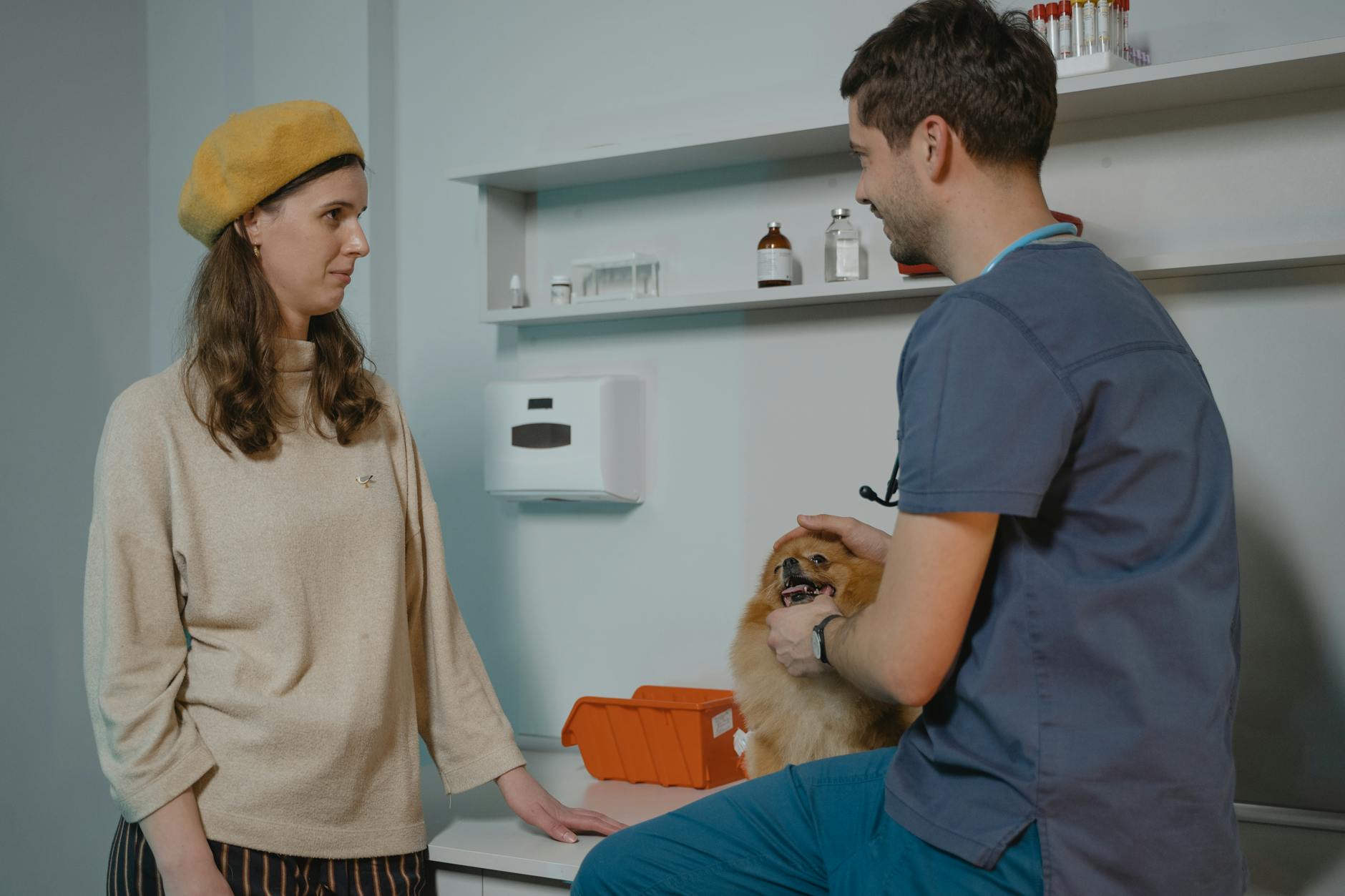
Veterinary practices have a structural problem: the phone rings constantly, but the staff rarely has time to answer it calmly. At the same time, pet owners expect fast responses – including outside office hours. The result: missed calls, long hold times, and a front-desk team permanently shuttling between patients and the phone.
The pressure isn’t new. But the options for reducing it are. AI-powered phone agents, automated appointment booking, and smart follow-up workflows can genuinely take load off veterinary practices – if you do it right. And that means: not just bolting on some chatbot, but knowing the regulatory framework, choosing the right tools, and setting clear boundaries.
In this article, I’ll show you what can realistically be automated in a veterinary practice, which tools prove themselves in real use, and where AI simply has no business being.
What typically eats up time in veterinary practices
Before you think about automation, it’s worth taking an honest look at your own practice. In most veterinary practices, a substantial share of front-desk work goes to tasks that fundamentally don’t require a human decision:
- Appointment bookings for routine exams and vaccinations
- Questions about opening hours and availability
- Follow-ups on ongoing medication plans or prescription refills
- Reminders for vaccinations that are due
- Initial triage questions for emergencies: how serious is it really?
Especially at peak times – the vaccination waves in spring and fall, around holidays, after vacation periods – the front desk runs at full capacity. And that’s exactly when there’s no time left for the cases that truly need attention.
A practice team taking 30 to 50 calls a day, 60 percent of them pure routine, loses several hours every day to tasks that could be automated.
What AI can concretely do in veterinary practices
AI phone agents and chat assistants can do more today than just recite opening hours. But the framework has clear limits – more on that in a moment.
Appointment booking: This is the most obvious entry point. Systems like Emma by Vetpal (vetpal.de) or the Tierarzt-Telefonbot (tierarzt-telefonbot.de) were built specifically for veterinary practices. They hold conversations in German, recognize the reason for the call, and book appointments directly into the existing practice software – no media break, no manual rework.
Vaccination reminders: If you know when an animal was last vaccinated, you can send reminders automatically. Native functions in your practice software, or the built-in CRM features of specialized platforms, can handle these workflows without any external tinkering.
Initial emergency triage questions: A well-configured phone agent can ask targeted questions on emergency calls – species, symptom, duration – and then either transfer directly or assign a priority. That relieves the front desk and prevents a real emergency from getting lost in the queue.
Prescription refills: Pet owners reordering an ongoing long-term medication generally don’t need to speak with the veterinarian. These orders can be taken by a bot, entered into the system, and queued for approval.
Here’s an example of what such a dialog could look like with a phone agent:
Pet owner: "I need a refill of the heart medication for my dog, Beppo Meier."

AI agent:  "Of course. Let me look up Beppo Meier in our system –
           one moment. I can see there's a long-term medication on
           file for Beppo. May I take the order and forward it to
           the practice for approval?"

Pet owner: "Yes, please."

AI agent:  "Done. The practice will get back to you later today or
           tomorrow morning, as soon as the prescription is ready.
           What's the best number to reach you?"
This isn’t science fiction. It works today. The prerequisites are a working integration with your practice software and a cleanly configured workflow.
Regulation: what you absolutely need to know
This is where it gets serious. And I’m not saying this to scare you, but because this part gets glossed over in far too many sales conversations.
GDPR and health data: An animal’s data isn’t a person’s health data as such – so far, so clear. But: as soon as you process the owner’s name, the patient number, diagnoses, medication plans, or findings, you’re handling the owner’s personal data under GDPR (the EU’s data-protection law). Combined with the animal’s health information, this can be classified as a sensitive data category under Art. 9 GDPR.
Concretely, that means:
- You need a legal basis for every processing activity (usually: consent or performance of a contract)
- To use an external AI provider, you need a data processing agreement (DPA)
- Data must not flow uncontrolled to third countries – relevant for many US-based cloud services
Providers like the Tierarzt-Telefonbot explicitly state that all data is processed in Germany and that the DPA is a standard part of the contract. That should be your minimum standard.
Professional confidentiality under Section 203 of the German Criminal Code: Veterinarians are bound by professional confidentiality. That covers everything exchanged between pet owner and practice – diagnoses, findings, treatments. An AI phone agent must not pass any of this information to third parties, log it uncontrolled, or feed it into systems that aren’t part of the agreed processing framework.
That sounds obvious. It isn’t, when you consider that many cheap chatbot solutions store conversation logs by default in a cloud outside the EU.
GOT – Germany’s fee schedule for veterinarians: The GOT sets a fee corridor. There’s no fixed price, but a range from the single to the triple rate. An AI may quote rough cost ranges for routine services as orientation – but only with a clear disclaimer that the final price is set after examination and individual assessment by the veterinarian.
For deviations outside this corridor, the GOT requires written form – something no AI can agree to on its own.
Which solution fits which practice size
Not every solution fits every practice. Here’s an honest overview:
For smaller practices with a limited budget: Many low-cost practice software packages have little to no AI integration. If you want to automate here, you either need an add-on solution or a switch of your main software. A standalone AI phone agent can be a pragmatic addition without replacing your existing software – with a manageable setup effort.
For mid-sized practices: Established practice software now offers AI documentation, automated scheduling, and patient communication as integrated modules. Costs scale with the feature set and can usually be structured flexibly (buy, rent, or lease) – a moderate ongoing expense that pays for itself through saved admin time.
For larger practices and clinics: Specialized booking and CRM platforms with an AI agent can resolve a significant share of recurring requests on their own, some of them in multiple languages. That’s particularly interesting for practices with an international client base or high request volumes.
There are also solutions for AI-supported voice documentation right in the treatment room: the veterinarian dictates, the system transcribes, links lab results, and drafts the treatment report – without permanently storing the audio files, GDPR-compliant with a DPA.
Generic automation tools in the background are possible in principle – but with caution. Integration with specialized veterinary software is often limited, and you have to make sure no patient-related data runs through US servers. When in doubt: go with native integrations.
Where AI doesn’t work in veterinary practices
This is the part I always bring up – because it matters more than any success story.
No diagnoses, no treatment recommendations. An AI system must never say: “That sounds like an ear infection, try some ear drops.” That’s a medical statement reserved for the veterinarian. Period.
No independent cost estimates for complex procedures. If a pet owner asks what a cruciate ligament surgery for a dog costs, the most the AI can say is: “That depends on several factors – please speak with our practice directly.” A concrete number without an examination is a problem – both regulatorily and in terms of liability.
No substitute for emotional conversations. When an animal dies, when an owner is scared, when someone is crying on the phone – that requires a human. AI can recognize that a conversation is escalating and transfer it. But it must not take over that situation.
No complex triage for unclear emergencies. A simple initial screening – “Can the animal breathe? Is it bleeding heavily?” – is possible. But a differentiated assessment of whether a set of symptoms needs immediate treatment remains the veterinarian’s job.
What we pay attention to in implementation
From conversations with practice owners, I know what makes or breaks these projects. We build these five points in from the start:
Data processing agreement from day one. As soon as personal data flows into an AI tool, the DPA is part of the setup – not an afterthought, but the first step. Without it, using the tool is a GDPR violation, even if nothing ever goes wrong.
Configure narrowly instead of allowing everything. An assistant that’s supposed to do everything will eventually answer medical questions it must not answer. We define clear boundaries and escalation paths from the start – the assistant handles only what it can handle safely, and passes everything else to a human.
Involve the team early. If the front-desk team first hears about the new system at go-live, you get resistance. We bring the people who’ll work with it into the planning stage – that’s what decides whether it’s accepted in daily use.
Verify integrations up front. A phone agent that takes appointments but doesn’t write them into the practice software creates double work instead of relief. Before launch, we verify which integrations actually work in your specific software environment – not what a website claims.
Configure retention periods properly. Call logs, chat transcripts, and audio recordings are subject to retention obligations: billing data ten years, treatment records at least five years after completion. These periods are configured in the setup so that data is stored neither too long (data privacy) nor too briefly (professional regulations).
My takeaway
AI can deliver real value in veterinary practices – but only if the regulatory framework is solid and expectations are realistic. The relief at the front desk is real: fewer routine calls, fewer missed inquiries, more focus on the patients in the waiting room. But the boundary is clear: medical judgment, emotional conversations, and complex cost questions stay with humans. Follow that principle, and you’re investing wisely. Hope to replace the veterinarian along the way, and you’re buying yourself problems.